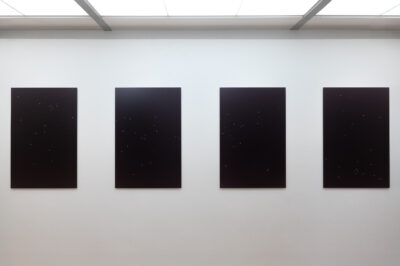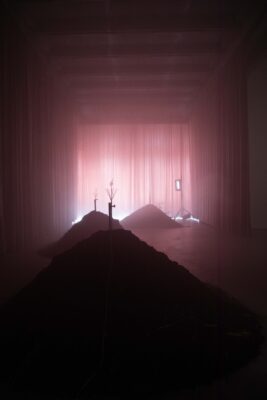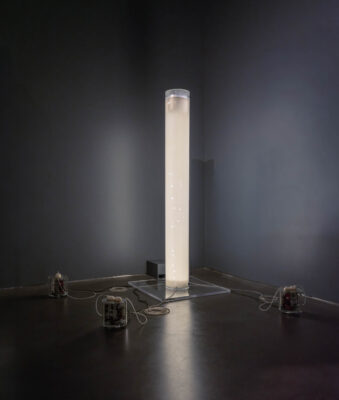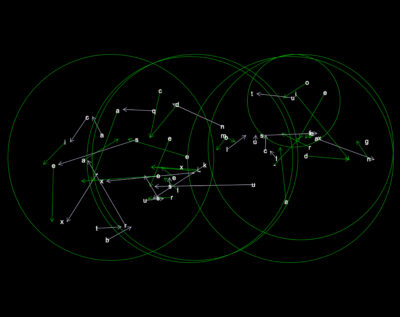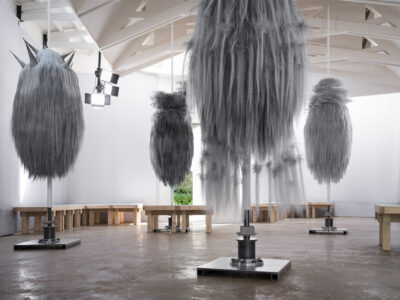
Founded by myself and Anni Puolakka in 2009, OK Do is a critical art/design practice for cultural introspection and intervention. Operating between Helsinki and Paris, and in collaboration with organisations and individuals of different stripes, we come together in publications, installations and presentations.
Challenging the permanent with the temporary, the big with the small, the social with the cultural and the global with the local, OK Do's activities sometimes resemble those of an alternative cultural institute. Our past projects have dealt with, for example, the societal parameters of contemporary design, the aesthetics of science, and literary placemaking.
Photo: Hertta Kiiski. Related: Science Poems book and exhibition 2010, OK Talk Helsinki/London book and discussions 2010-2011.
-
close x
-
close x
To be published in December, 'Solution Finland: The Welfare Game' (series ed. Ingo Niermann, Sternberg Press 2011) by architect Martti Kalliala, co-written with architect Tuomas Toivonen and me, addresses the Nordic country’s numerous predicaments. We propose eight and a half solutions to our native country’s quandaries, ranging from the practical (rescuing ailing public space through climatization and the introduction of the Winter Garden City), to the absurd (dividing the country into two interlocking sub-nations: City and Wilderness) and the earnest, if far-reaching (the repurposing of the country to host the world’s nuclear waste).
The book elucidates the northern country’s modern history as a nation under construction, proposing that its identity remain a malleable myth, in which designing a more tenable future is the conduit for crucial adaptation.
Design: Z.A.K.
-
close x
I wrote about Vuokko Eskolin-Nurmesniemi, my favourite Finnish designer and Issey Miyake's fashion mom, for Apartamento magazine #7, 2011.
"If you don't ask yourself, you'll never get the answer."
Never boring and never bored, Vuokko's always had her own questions. She has, for example, used batteries in clothes to keep them warm, as long as 50 years ago, and blocked holes in printing machines with chewing gum in order to enable larger patterns in her fabrics for the early Marimekko collections. 'Design Mom' piece discusses the establishment of this "Vuokko way of thinking", and how nothing has ever stopped her since.
Portrait: Kaarle Hurtig. Related: Literary collaboration with fashion designer Daniel Palillo (Nevermind 2011). Art/design columnist for Image Kustannus magazines 2007-2010.
-
close x
Yé Yé is a casual night of music dictated by the thought, in the absence of any control exercised by reason. Based around Helsinki, travelling from place to place, it provides a home for different musical visions and activities from performances to installations, embellished with a surrealist backdrop.
Together with KD, we play both current and past music of the future from experimental and cosmic to new, cold and dark waves. Our past projects stretch from musical essays to film screenings and guests include Momus, the singing author in concert.
Poster: Johannes Ekholm. Related: Literary and musical collaboration with Renaissance Man (Renaissance Man Project, Turbo Recordings 2011).
-
close x
"Finnish musicians like to repeat things. It goes on and on... Sometimes for too long."
For the April 2011 issue of The Wire magazine, I got out of control about music with Shinji Kanki, a Japanese-Finnish composer and my former sound art teacher, as well as other local practitioners, with a mission to unravel Finland's orderly art music scene. The 'Global Ear Helsinki' piece discusses methods such as unorthodox musical education, i.e. encouraging students not to listen too much while they're playing, interpreting roof tiles as a score, and trying to only produce sound when no one else is. However, it also endorses the beauty of tedium:
"The best thing about the new music scene is that you can't always be sure when the concert started, or if it already started or not."
Photo: Hertta Kiiski. Related: Music editor for Kasino A4 magazine 2008-2009.
-
close x
The bi-annual everyday life interiors magazine Apartamento explores the ways people live, or "how they find solutions to the same problems that everyone has". According to this thematics, yet dealing with quite exceptional problems, I wrote about 'Homes for Abstract Content' in Jean Renaudie's 1970s social housing blocks in Ivry sur Seine for issue #5, 2010.
The complex of eight buildings in the suburbs of Paris proposes an alternative to classical and modernist dwellings, offering different apartments for different people. The random room heights, shapes and sizes require the inhabitants to agree with an unconventional way of life, the apartments being stronger than them. Disturbing and unpractical, they push the boundaries of everyday life and inspire to break free of mechanical, automatic living.
Related: 'The Mushroom Theory' in Apartamento #6 2010, 'Symbolic Space' in Apartamento #8 2011.
-
close x
Following the editing of graphic design agency Kokoro & Moi's biography for Les Éditions Pyramyd, I curated a retrospective exhibition for them at NOW IDeA gallery in Aoyama, Tokyo in October 2009. The 'Air Current/Past' exhibition presented Kokoro & Moi’s work from a new perspective, depicting a journey instead of the destination and exploring the elements of variation, collaboration and play in the agency’s projects over the past eight years.
The project featured an aerogami workshop by Takuo Toda, the holder of the world record for the longest paper plane flight. Folding and flying A4 prints presenting a retrospective take on Kokoro & Moi’s design, Mr. Toda and the workshop participants jointly produced an exhibition of paper planes in the air.
Photo: Teemu Suviala. Related: Prologue for Print 6/2011, guest art directed by Kokoro & Moi.
-
close x
thisissand.com is a website for play. It changes the pixels on the screen into digital sand that can be used as building material for cosmic landscapes, Clemens-style sand paintings, mandalas and so on. I made it with Johanna Lundberg and Timo Koro in 2008.
The digital sandbox on thisissand.com takes after the physical one. Just like the actual sand gets its colour from its origins, the sand used on thisissand.com covers the RGB palette natural to digital environments. Also the sounds of falling sand resemble a real life phenomenon where the wind triggers a low-pitch sound in natural sand. Instead of nature's frequencies the digital sand generates white noise, which is considered analogous to white light, containing all frequencies like the RGB grains do.
Image: 'Tutanchamun' sand drawing by Kolibri. Related: Lectures at Parsons The New School for Design CDT and Pixelache festival 2009.